

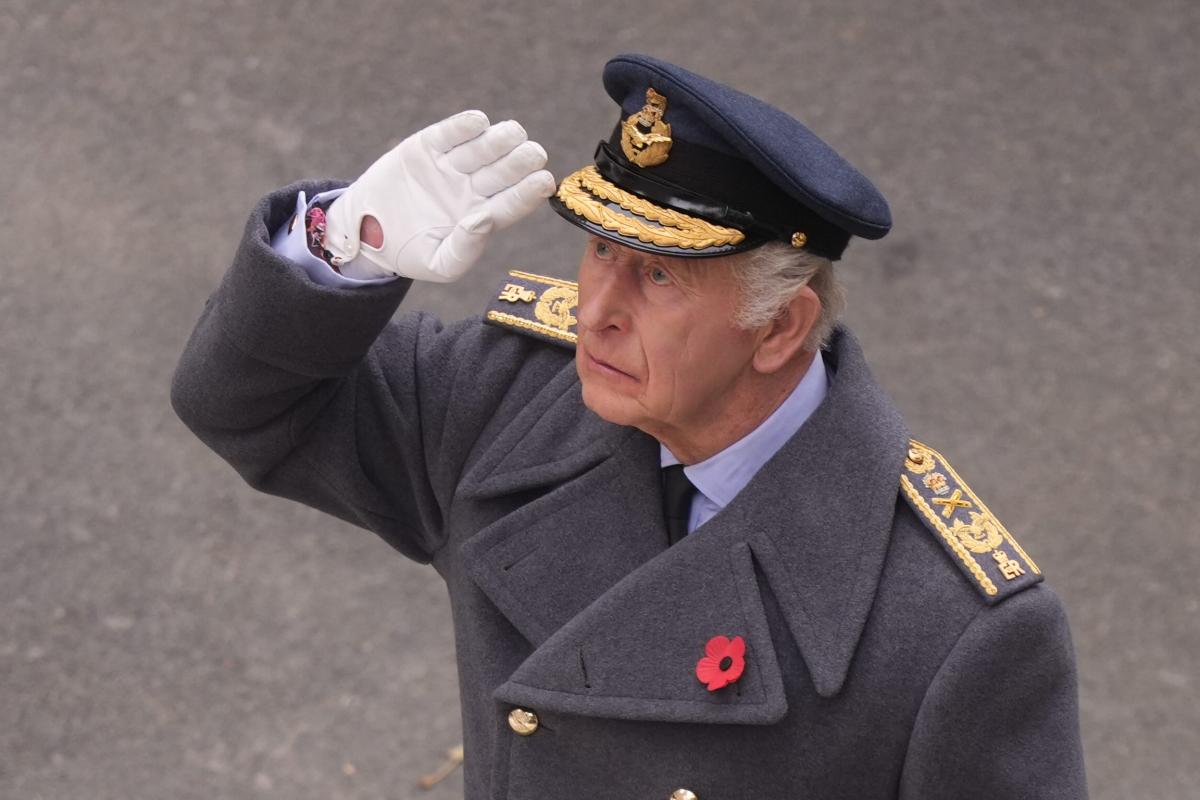

The King has led the nation in honouring those who have died in conflict on Remembrance Sunday at a ceremony attended by thousands of veterans.
Charles took centre stage and laid the first wreath at the Cenotaph in recognition of the fallen from conflicts dating back to the First World War, and was followed by the Prince of Wales.
Wearing a field marshal uniform complete with a greatcoat, cap and sword, the King saluted as he stepped back from the monument in Whitehall after leading the nation in a two-minute silence.
His wreath closely resembled one produced for King George VI, with 41 paper poppy petals mounted on an arrangement of black leaves.
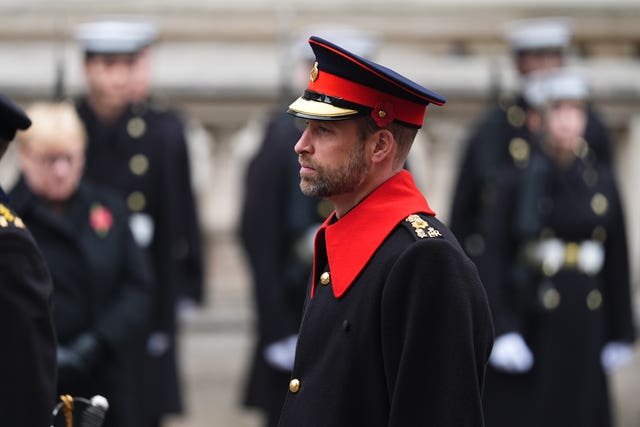
His son William, wearing the uniform of a Lieutenant Colonel of the Household Cavalry with black cloak and sword, also saluted after laying his wreath.
William, who in 2013 completed seven-and-a-half years of full-time operational military service, promotes the roles and welfare of current and former service personnel as a key part of his work.
The prince was followed by wreaths being laid by the Duke of Edinburgh and the Princess Royal.
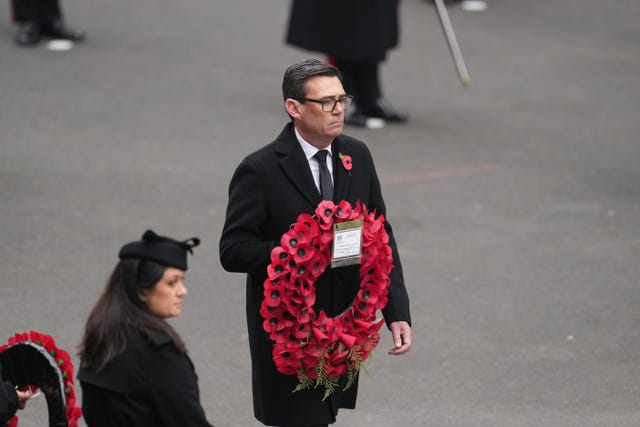
Prime Minister Andy Burnham also laid a wreath, along with senior politicians including Kemi Badenoch, Sir Ed Davey, Nigel Farage, Shabana Mahmood and Sir Lindsay Hoyle.
Standing close to the Cenotaph were nine former prime ministers: Sir John Major, Sir Tony Blair, Gordon Brown, Lord Cameron, Baroness May, Boris Johnson, Liz Truss, Rishi Sunak, and Sir Keir Starmer.
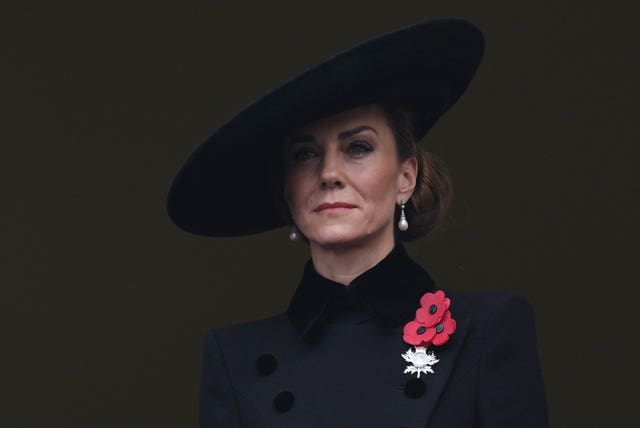
The Princess of Wales and the Queen, both dressed in black, watched the ceremony from the central balcony of the Foreign, Commonwealth & Development Office overlooking the Cenotaph.
Kate was wearing a black coat by Catherine Walker, earrings belonging to Diana, Princess of Wales and a HMS Glasgow brooch.
The pair were joined on the balconies by the Duke and Duchess of Gloucester, the Duke of Kent and the Duchess of Edinburgh.
A rendition of the Last Post was sounded by the Buglers of the Royal Marines as the silence concluded.
About 10,000 veterans took part in the Royal British Legion’s march-past after the service, with more than 300 Armed Forces and civilian organisations represented.
The veterans included around a dozen of the last surviving Second World War veterans, the oldest of whom is 105.
The 105-year-old was Jeffrey Brereton, who served as a mechanic on Hurricane aircraft during the Battle of Britain.
He volunteered for the RAF in 1940, aged 19, and was nicknamed “lucky” by his unit before he left the army to join the fire service in 1946.
Mr Brereton told the press that this was the first time he had ever attended the national Cenotaph ceremony.
The youngest people taking part in the march were eight-years-old, including Ronan Doncaster, who walked in honour of his father – a guardsman with the first battalion Coldstream Guards who died in April 2024.
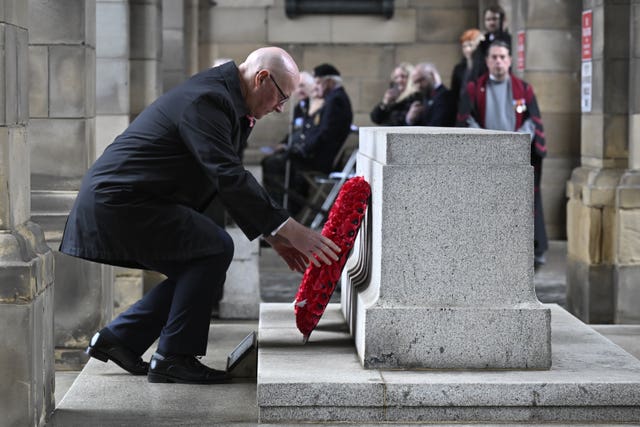
Taoiseach Micheál Martin and Northern Ireland Secretary Sir Chris Bryant attended a memorial service in Enniskillen, Co Fermanagh.
In 1987, the event was targeted by an IRA bomb which killed 11 people on the day and a 12th victim years later, who never woke up from a coma.
In Scotland, First Minister John Swinney led tributes at a service outside Edinburgh City Chambers.
A military parade marched down the Royal Mile from Edinburgh Castle, led by the RAF Central Scotland Pipes and Drums.
A service attended by veterans, faith leaders and representatives of the Armed Service was also held in George Square, Glasgow, with a silence at 11am followed by a wreath laying ceremony.


Share